
Custom Leather Rigs for Film Production: Built for Unique Needs
How Custom Leather Rigs Adapt to Film Production
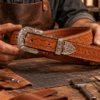
In filmmaking, equipment and wardrobe have to do more than look convincing on camera. They also need to work with the actor, costume, stunt choreography, props, and visual style of the production. Custom leather rigs allow filmmakers to tailor those details around the specific needs of a character and scene instead of forcing a standard design to work.
In practice, customization can begin with something as simple as changing strap length or positioning. More complex productions may require adjustments to the shape, attachment points, leather thickness, finish, or placement of a holster or accessory.
Designing Around the Character and the Scene
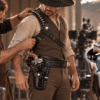
A rig worn by a character standing in dialogue scenes has different requirements from one used during horseback riding, running, stunt work, or repeated action sequences. The leather also has to interact correctly with jackets, belts, props, and other wardrobe pieces.
Before production, useful information can include:
- Actor measurements and where the rig should sit
- Prop dimensions and configuration
- Costume layers that will be worn underneath or over it
- Required movement, stunt work, and camera visibility
- Desired leather color, finish, distressing, and period appearance
A common mistake is concentrating only on appearance. A visually accurate rig can still cause problems if it shifts during movement, interferes with the costume, or places a prop differently from one take to another.
Customization as Part of Visual Storytelling
 The best custom leather rigs become part of the character rather than looking like equipment added at the last minute. A Western production might require historically inspired tooling and an aged finish, while a modern action project may prioritize a cleaner silhouette and secure positioning.
Tools such as leather punches, stitching equipment, edge tools, dyes, molds, and pattern templates allow craftspeople to modify individual components while maintaining a consistent overall design. For filmmakers, this makes production leather gear especially useful when standard sizing or off-the-shelf construction cannot provide the required look or fit.
What Recent Film Production Can Teach Us
The Bikeriders (2024) provides a useful example of how individualized leather work supports storytelling. Costume designer Erin Benach explained that the production combined sourced pieces with newly built leather jackets and then altered, aged, and distressed them. Because of the stunt work, the costume department also needed multiple versions of certain costumes.
The customization went deeper than making everything look old. Different characters received different treatments. Cal’s clothing reflected his mechanical, detail-oriented personality, Zipco wore his colors directly on leather rather than following the same configuration as the other riders, and Benny’s jacket was intentionally made to look loose and effortless.
That is an important lesson for filmmakers: customization does not always mean adding more. Sometimes it means changing placement, reducing detail, modifying wear patterns, or building several matched pieces for continuity.
For productions using custom holsters, the same principle applies. Start with the story, prop, actor, wardrobe, and physical requirements of the scene. Then design the leather around those conditions.
Final Thoughts
Customizing leather rigs for film production is ultimately about combining function, continuity, and visual authenticity. A well-designed piece should complement the costume, accommodate movement, work reliably with production props, and remain consistent across repeated takes.
For filmmakers, costume departments, and production teams, involving an experienced leather craftsman early in the process can help prevent fitting issues and create equipment that is better suited to the demands of the project. When every detail matters on camera, purpose-built leather work can provide the flexibility and control that standardized options may not offer.
You can see our products here:
Western Hollywood Leather Rig – BH331 The Cimarron RigDouble Leather Western Hollywood Rig – BH222 The Concho King
Frequently Asked Questions
Can a leather rig be customized for a specific costume or prop?
Yes. Measurements, positioning, strap configuration, finish, leather weight, and attachment points can all be considered when developing a rig for a particular production. Providing accurate costume and prop specifications early helps reduce fitting problems later.
Why would a film production need more than one version of the same rig?
Productions may need duplicates for stunt performers, backup wardrobe, continuity, or scenes involving significant wear. The Bikeriders, for example, required multiples of costumes because of its stunt work, demonstrating why production planning should account for more than one camera-ready version when necessary.