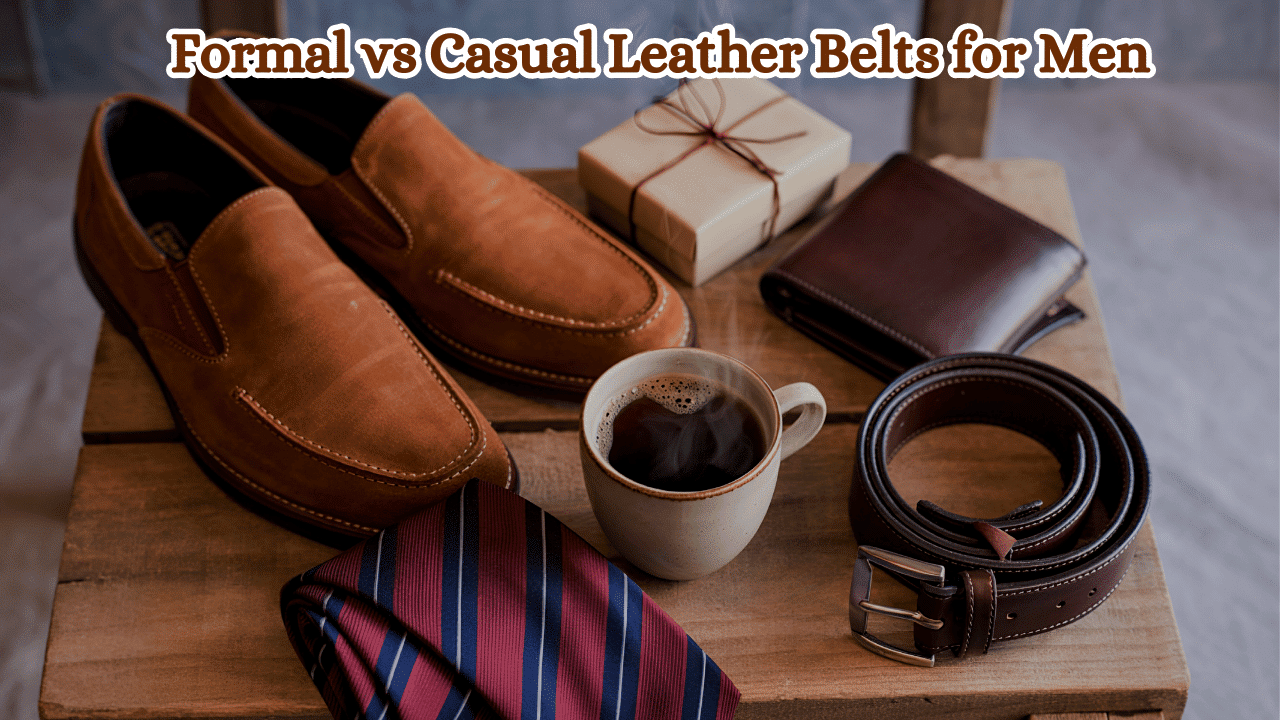
Formal vs Casual Leather Belts for Men: Key Differences and How to Choose
A belt may seem like a small accessory, but in practice, it can define your entire look. Understanding the difference between formal vs casual leather belts for men helps you avoid style mistakes and build a more versatile wardrobe. Whether you’re dressing for the office, a wedding, or a weekend outing, choosing the right belt ensures your outfit feels intentional, not accidental.
Understanding Formal Leather Belts
A formal leather belt is designed to complement business or dress attire. Think tailored suits, dress trousers, and polished shoes.
Key Characteristics of Formal Leather Belts
- Slim width (usually 1–1.25 inches)
- Smooth, high-quality leather
- Simple, polished buckle (silver or gold tone)
- Minimal stitching or decoration
- Classic colors like black or dark brown
In business settings, subtlety equals sophistication. A common mistake is pairing a bulky belt with a sleek suit, it disrupts the clean silhouette.
When to Wear a Formal Belt
- Corporate meetings
- Weddings and formal events
- Black-tie or semi-formal occasions
- Professional presentations
In my experience, matching your belt to your shoes is still the safest rule. Black shoes? Black belt. Brown shoes? Brown belt in a similar shade.
Understanding Casual Leather Belts
 Casual belts are more relaxed in design and materials. They’re meant to complement jeans, chinos, and everyday outfits.
Key Characteristics of Casual Leather Belts
- Wider straps (around 1.5 inches or more)
- Textured, distressed, or full-grain leather
- Larger or matte buckles
- Visible stitching or decorative details
- More color variety (tan, cognac, even navy)
These belts add personality. For example, pairing a rugged brown belt with jeans and boots creates a balanced, laid-back look.
When to Wear a Casual Belt
- Weekend outings
- Smart-casual office environments
- Travel and everyday wear
- Outdoor or social events
A practical tip: if you’re wearing denim or thicker fabrics, a slim formal belt will look out of place. The weight of the belt should match the weight of your clothing.
How to Choose Between Formal and Casual Leather Belts
If you’re unsure which to pick, ask yourself two questions:
- What shoes am I wearing?
- How structured is my outfit?
The more structured your outfit (suit, blazer, dress pants), the more refined your belt should be.
Practical Comparison
| Feature | Formal Belt | Casual Belt |
| Width | Slim | Wider |
| Finish | Smooth | Textured or distressed |
| Buckle | Minimal, polished | Larger, matte, detailed |
| Best with | Suits, dress pants | Jeans, chinos |
In real situations, tools like a capsule wardrobe planner can help you evaluate how many belts you truly need. Most men only require:
- One black formal belt
- One brown formal belt
- One versatile casual brown belt
That’s enough to cover nearly every occasion.
When comparing dress belts vs everyday belts, remember: formality is about simplicity and proportion. Overly decorative designs rarely work in professional settings. Choosing between formal vs casual leather belts for men doesn’t have to be complicated. Focus on proportion, material, and occasion and you’ll always look put together with minimal effort.
FAQs
1. Can I wear a casual leather belt with a suit?
Technically yes, but it’s not recommended. Casual belts are usually wider and more textured, which clashes with the clean lines of a suit. For professional or formal occasions, stick with a slim, smooth leather belt.
2. How many leather belts should a man own?
For versatility, three is ideal: a black formal, a brown formal, and a brown casual belt. This covers business, formal events, and relaxed settings without overcomplicating your wardrobe.