Handmade vs Machine-Made Leather Belts
Handmade vs Machine-Made Leather Belts: The Real Differences
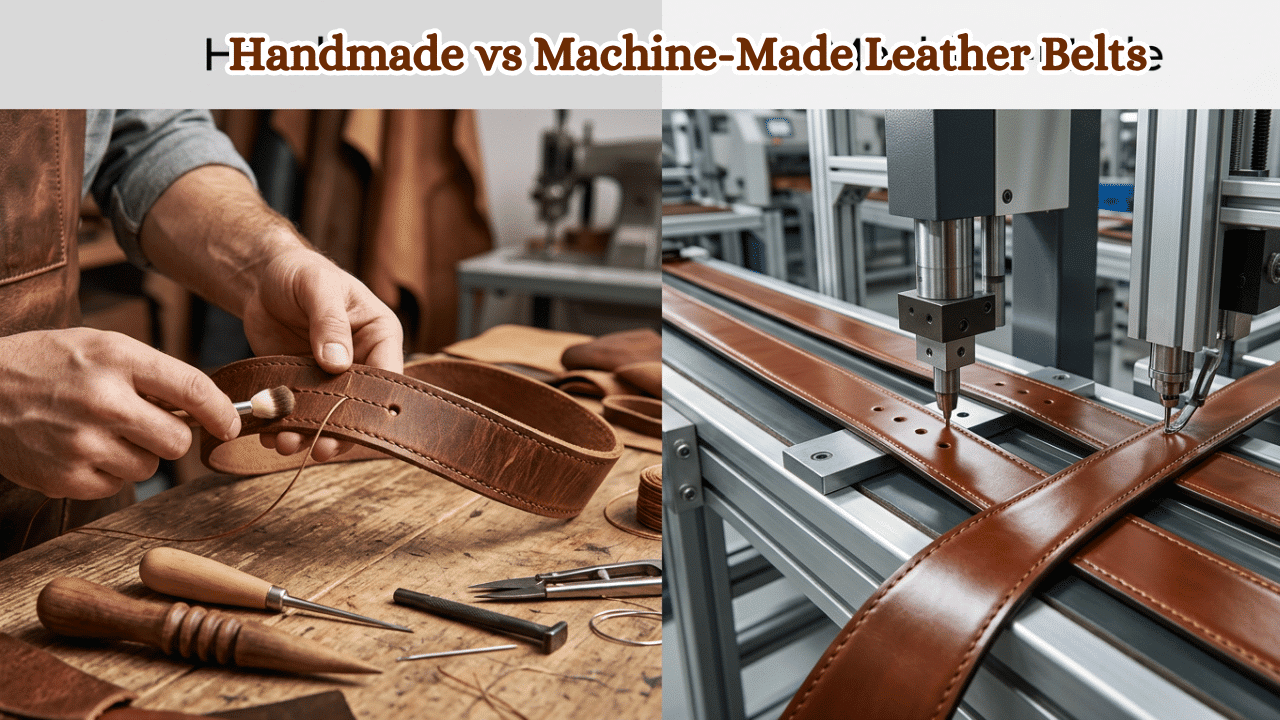
A leather belt is simple on the outside: leather strip, hardware, and a way to fasten, but the way it’s made changes everything. In practice, handmade leather belts are crafted piece-by-piece by people, while machine-made leather belts are produced in faster, standardized batches. Here’s what that usually means for you as a buyer.
Crafting approach and quality you can feel
Handmade belts tend to have more consistent finishing because the maker controls the details: edge dressing, stitching tension, and leather selection. Machine production can be very good too, but it often relies on templates and speed, which can hide small flaws that show up after months of wear.
You’ll notice it in everyday situations. For example, a belt used daily to hold up jeans usually experiences repeated bending near the buckle. Handmade construction often holds its shape better because the materials and stitching are selected with those stress points in mind.
Durability, comfort, and fit
A belt isn’t just about looking Sharp, it’s about how it behaves on your body. Handmade belts often feel more comfortable because the leather may be thicker or better conditioned, and the belt body may be built to flex where you need it most. Machine belts can be perfectly wearable, but a common mistake is buying purely for style while ignoring how stiff the leather is at first. If the belt feels rigid at purchase, it may take longer to break in, or never fully relax.
Related tip: when comparing options, check the edge finish, the stitching pattern, and how the buckle sits. These are quick “quality tells” you can spot without specialized tools.
Cost, ethics, and long-term value
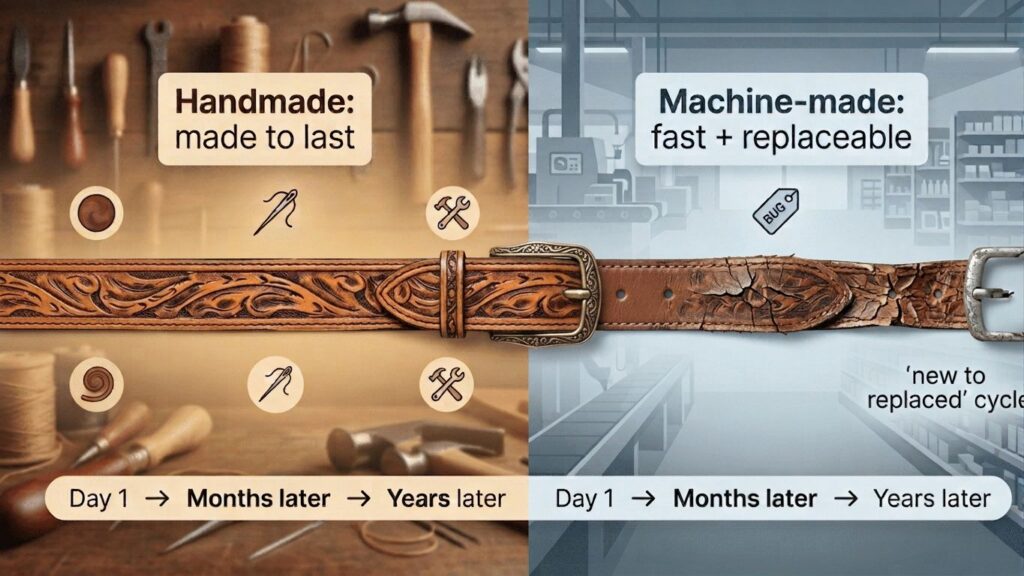
Handmade belts usually cost more upfront. However, the real question is total value: how long it lasts, whether it repairs well, and whether it stays attractive as it patinas (develops a natural sheen over time). Machine-made belts often cost less and can be easier to replace. They’re a practical choice if you want a trend-driven look or occasional wear. Think: a belt for a one-off event versus a belt you’ll wear to work five days a week.
How to Choose
Start by matching the belt to your lifestyle, not just your wardrobe.
Choose handmade when…
- You want maximum longevity and better finishing.
- You care about how leather ages (patina is a big deal for many owners).
- You want more reliable stitching and hardware alignment.
Choose machine-made when…
- Budget is the priority.
- You need a belt quickly and consistently sized.
- You’re replacing belts more often due to frequent style changes.
Actionable checklist before you buy
Look closely at a few details:
- Leather thickness and surface: does it look dense, not just glossy?
- Stitching: even spacing and secure edges usually signal better construction.
- Buckle hardware: smooth movement and solid attachment matter.
- Fit planning: measure your favorite belt and account for sizing differences.
In real stores, I’ve seen customers pick a belt that looks perfect in the mirror but pinches at the second loop. Bringing a measuring tape and comparing against a well-worn belt is one of the fastest ways to avoid buyer’s remorse.
FAQ: Handmade vs Machine-Made Leather Belts
Are handmade leather belts worth the extra money?
Often, yes, especially if you wear your belt daily. Handmade options tend to last longer, age more gracefully, and usually maintain their structure better, which improves long-term value.
Can machine-made belts still be high quality?
Absolutely. Some machine-made belts are built with excellent materials and tight quality control. The key is to inspect craftsmanship details: stitching, edge finishing, and buckle security, rather than relying on the label alone.