
Vintage Leather Belt Styles: How to Choose, Wear, and Recognize Timeless Designs
What Makes a Leather Belt “Vintage”?
Vintage leather belt styles are belts inspired by past decades, usually defined by aged leather, distinctive buckles, traditional craftsmanship, and details that feel more personal than modern mass-produced accessories. In simple terms, a vintage belt looks like it has a story. It may have a warm patina, natural creases, hand-tooled patterns, brass hardware, or a silhouette that reflects a specific era.
In practice, the charm comes from balance. A belt should look characterful, not worn out. Think of it like a well-loved leather jacket: soft edges and natural aging add appeal, while cracked leather or weak stitching can make it unreliable. This is why buyers often look for full-grain leather, solid metal buckles, and clean construction.
A common mistake is assuming every old-looking belt is high quality. Some retro leather belts are simply distressed to appear aged, while true vintage-inspired pieces usually rely on better materials and classic proportions. If you are shopping online, zoom in on the stitching, buckle attachment, and belt holes. These small details often reveal whether the belt is built to last or just styled for a trend.
Popular Vintage Leather Belt Styles and How to Wear Them
 The best vintage leather belt styles work because they complement your outfit without overpowering it. They can sharpen denim, add structure to a dress, or make simple trousers feel more intentional. The key is choosing a style that fits your wardrobe rather than buying the most decorative option available.
Popular choices include:
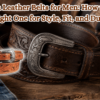
- Western tooled belts: Known for carved patterns, larger buckles, and a rugged feel. They pair well with denim, boots, and workwear-inspired outfits.
- Brass buckle belts: Simple leather straps with aged brass hardware. These are versatile and easy to wear with chinos, jeans, or casual tailoring.
- Braided leather belts: Flexible, relaxed, and great for summer outfits or smart-casual looks.
- Wide waist belts: Often used over dresses, coats, or long shirts to create shape and add a statement detail.
Choose the Buckle Before the Color
The buckle often determines how formal or casual the belt feels. A slim brass buckle looks refined, while a large engraved buckle leans bold and casual. If you want one belt for regular use, choose medium-width brown leather with a simple antique brass buckle. It works with blue denim, olive chinos, cream trousers, and even casual blazers.
Match the Leather to the Outfit’s Mood
Dark brown leather feels polished and mature. Tan leather feels relaxed and rustic. Black vintage leather can look sharp, especially with monochrome outfits, but it may feel too harsh with lighter casual clothing. As a rule, match the belt’s personality to your shoes or boots, not necessarily the exact shade. For example, walnut boots and a medium-brown belt can look natural together even if they are not identical.
For maintenance, a soft cloth and a small amount of leather conditioner can keep the belt supple. Avoid over-conditioning, because it can darken the leather or weaken its structure. A tailor’s measuring tape is also useful when buying vintage pieces, since older sizing may not match modern belt labels.
FAQ: Vintage Leather Belt Styles
Are vintage leather belts good for everyday wear?
Yes, if the leather is strong and the hardware is secure. Check for deep cracks, loose stitching, stretched holes, or rusted buckles before wearing one daily. Well-made classic belt designs can last for years with basic care.
How do I style a vintage leather belt without looking outdated?
Keep the rest of the outfit simple. Pair a detailed belt with plain jeans and a white shirt, or wear a simple vintage-style belt with layered textures like denim, wool, or cotton. The belt should feel intentional, not like a costume piece.