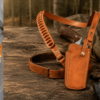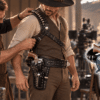
Why Hunters Use Hunting Rigs and/or Shoulder Holsters?
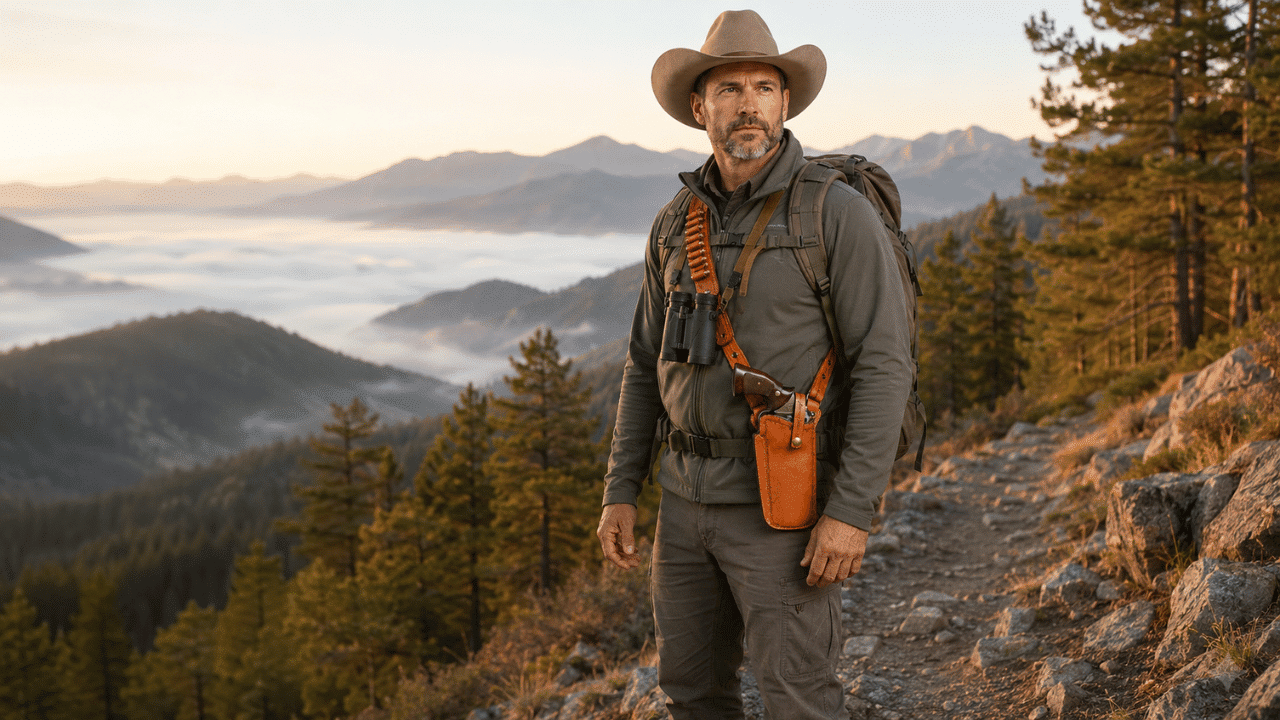
Hunters often spend hours moving through rough terrain while carrying a rifle, backpack, binoculars, rangefinder, and other equipment. In that environment, where gear is positioned matters almost as much as what gear is carried. This is one reason many hunters use chest and shoulder holsters: they provide a practical way to carry a handgun while keeping it accessible and reducing interference with other equipment.
A chest-mounted system positions the handgun higher on the torso instead of around the waist. This can be particularly useful when a hunter is wearing a large backpack with a padded hip belt. A traditional belt-mounted setup may become uncomfortable or difficult to reach once the backpack is secured.
Similarly, a shoulder holster can distribute weight across the upper body rather than concentrating it around the waist. Think of it like choosing a backpack with two supportive straps instead of carrying everything from one belt loop. The goal is comfort, accessibility, and compatibility with the rest of the hunting setup.
In practice, hunters often prefer these carrying positions when hiking through dense vegetation, climbing steep ground, riding an ATV, or spending long periods sitting in a blind.
Practical Benefits in Real Hunting Situations
 Comfort is one of the biggest advantages. Walking several miles with equipment pressing against the hip can quickly become irritating. Moving the holster higher on the body may prevent the handgun from competing for space with a backpack belt, jacket, or other equipment.
Accessibility is another consideration. Heavy winter clothing can cover equipment worn around the waist, while an upper-body setup may remain easier to access. However, accessibility should never come at the expense of secure retention and safe handling.
A common mistake is choosing a holster based only on comfort. Hunters should also consider retention, trigger protection, fit, and compatibility with their clothing and equipment. A quality holster should securely fit the specific handgun rather than allowing unnecessary movement.
Before heading into the field, practical checks include:
- Test the holster while wearing your actual hunting jacket and backpack.
- Confirm that backpack straps do not interfere with the holster.
- Practice safe access with an unloaded firearm in a controlled environment.
- Inspect straps, buckles, and retention components before each trip.
Tools such as backpacks, binocular harnesses, rangefinders, and layered clothing should all be considered when evaluating a chest holster. Something that feels comfortable at home may behave very differently after several hours on a mountain trail.
Hunters must also follow local firearm transportation and carry laws, since requirements vary by jurisdiction.
3. Choosing the Right Setup and Frequently Asked Questions
The best carry position depends on the hunter’s equipment, environment, clothing, and personal comfort. Someone carrying a large backpack may appreciate an upper-torso setup, while another hunter using lighter equipment may prefer a conventional belt holster.
Fit should always come before convenience. The holster should protect the trigger area, provide appropriate retention, and remain stable during normal movement. Hunters should also test their complete gear system together rather than evaluating each item separately.
FAQs
Are chest and shoulder holsters comfortable for long hunting trips?
They can be. Because the weight is carried higher on the torso, these designs may reduce pressure around the waist, particularly when a backpack hip belt occupies the same area. Proper adjustment is essential, however. Straps that are too loose can allow excessive movement, while overly tight straps may become uncomfortable during a long hike.
Why not simply use a belt holster while hunting?
A belt holster can work perfectly well for many hunters. Problems typically arise when backpacks, thick clothing, climbing equipment, or other gear blocks the waist area. Upper-body carry offers an alternative when belt space is limited. The safest and most practical choice is the setup that securely fits the firearm, works with the hunter’s complete equipment, and complies with applicable laws.